What makes a paper good for folding
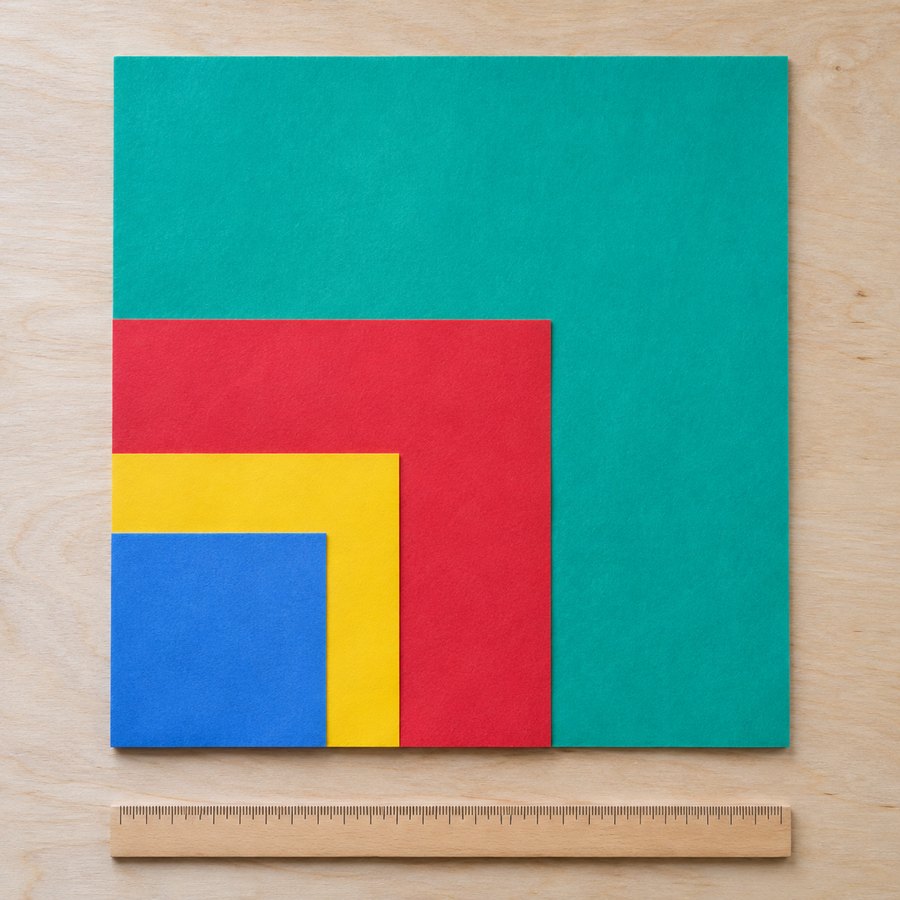
Good folding paper is thin, so six or eight layers can sit on top of each other without the model bulging open. It holds a crease after one press instead of springing back. It also needs to be cut accurately square, because every fold that starts from a corner carries any error in the edges into the next step.
Strength matters less than people expect for simple models. It starts to count when a model has many steps and you fold and unfold the same area several times. Cheap paper wears thin at those spots and can split along the crease.
Kami: the standard origami paper
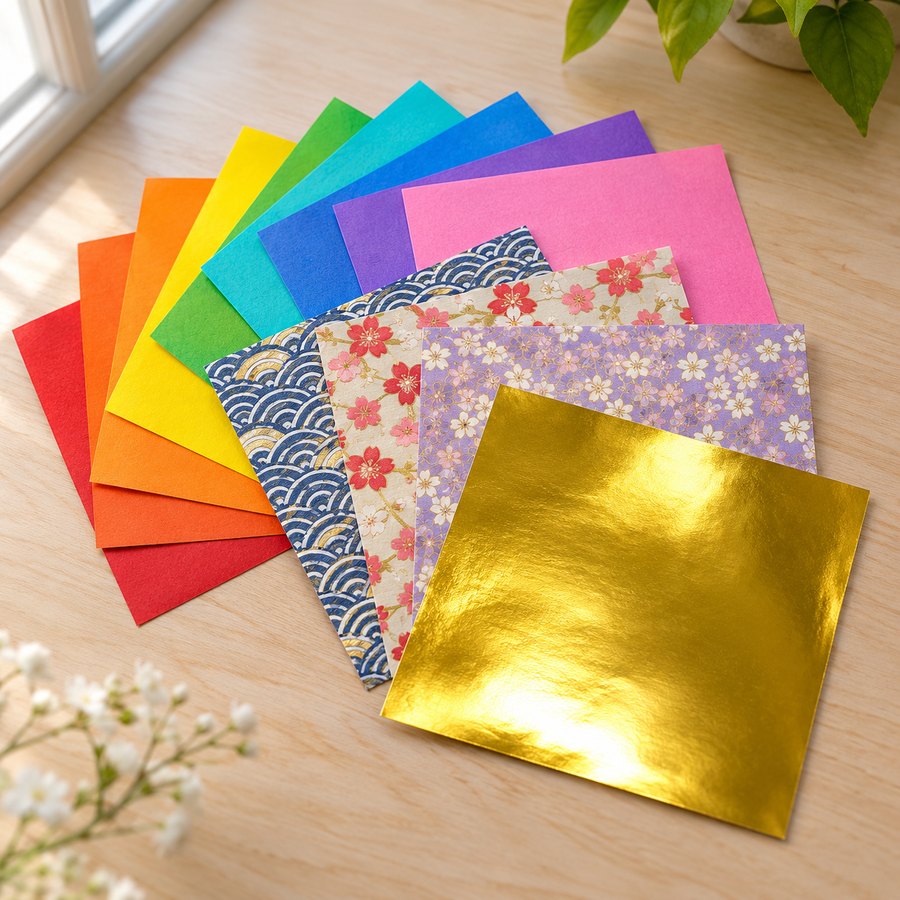
Kami is what most people mean when they say origami paper. The word is simply Japanese for paper, but in shops it refers to thin sheets coloured on one side and white on the other, sold in packs of mixed colours.
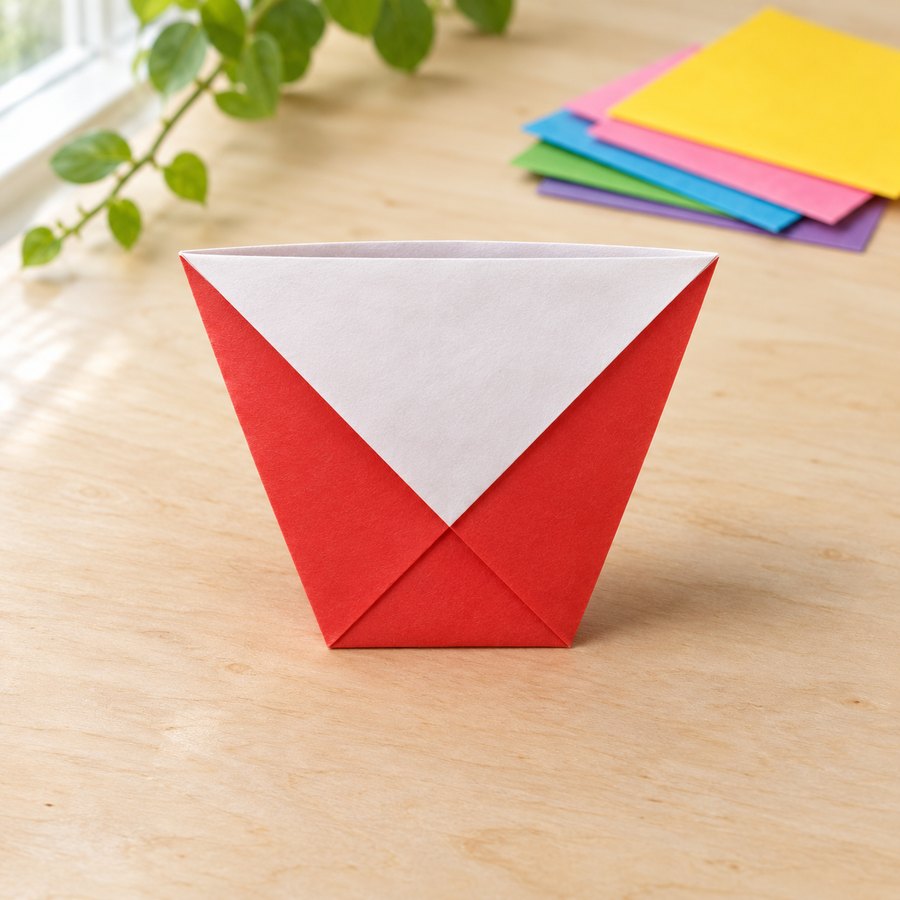
It is cheap, it takes sharp creases and it is thin enough for models with a lot of layers. The two faces are part of many designs. In the paper cup, for example, you start white side up, so the coloured side ends up outside and the white stays inside.
Its weak point is durability. Kami starts to tear if you unfold and refold the same spot too many times, so for a model you will practise over and over, keep a few spare sheets.
Double-sided and patterned paper
Double-sided paper is coloured on both faces, either in the same colour or in two different ones. It is worth having for models where both faces show in the finished piece, for example designs with colour changes or a brim folded back over the front.
Chiyogami is Japanese paper printed with repeating traditional patterns, often small floral or geometric motifs. Yuzen usually means a heavier version printed in many colours, and some sheets feel close to fabric.
Patterned paper looks best on simple shapes with large flat areas, like boxes, envelopes and cranes, where you can actually see the print. In a detailed model the pattern breaks up into small pieces and most of the effect is lost.
Washi and foil paper
Washi is traditional Japanese paper made with long plant fibres, and you can often see them when you hold a sheet up to the light. The fibres make it tough. It bends and softens with use instead of splitting, so it survives a lot of handling. Some washi is quite soft and gives rounder creases, which suits animals and gifts better than sharp geometric models.
Foil paper has a thin metallic layer on one side and usually white paper on the other. It holds whatever shape you press into it, which helps with small points and with models that need to stay put. Mistakes stay too, though. Every crease remains visible after you flatten it, so a wrong fold leaves a mark, and the white side is weak enough to tear where many layers meet.
Thick coloured paper and kraft paper
Thicker papers, such as tant and other sheets coloured all the way through, are a good choice for boxes and for modular origami, where you fold many identical units and slot them together. The stiffness keeps the units firm and the joints tight, and because the colour goes right through, the edges don't show a white line.
The same thickness works against you in models with many layers. Each layer adds bulk, and after a while the folds stop meeting where the diagram says they should.
Kraft paper, the brown wrapping paper sold on rolls, is strong and easy to find. It is handy for large models and gift boxes. You have to cut your own squares, and the thicker kinds are stiff enough that small, precise folds get difficult.
Printer paper, napkins and banknotes
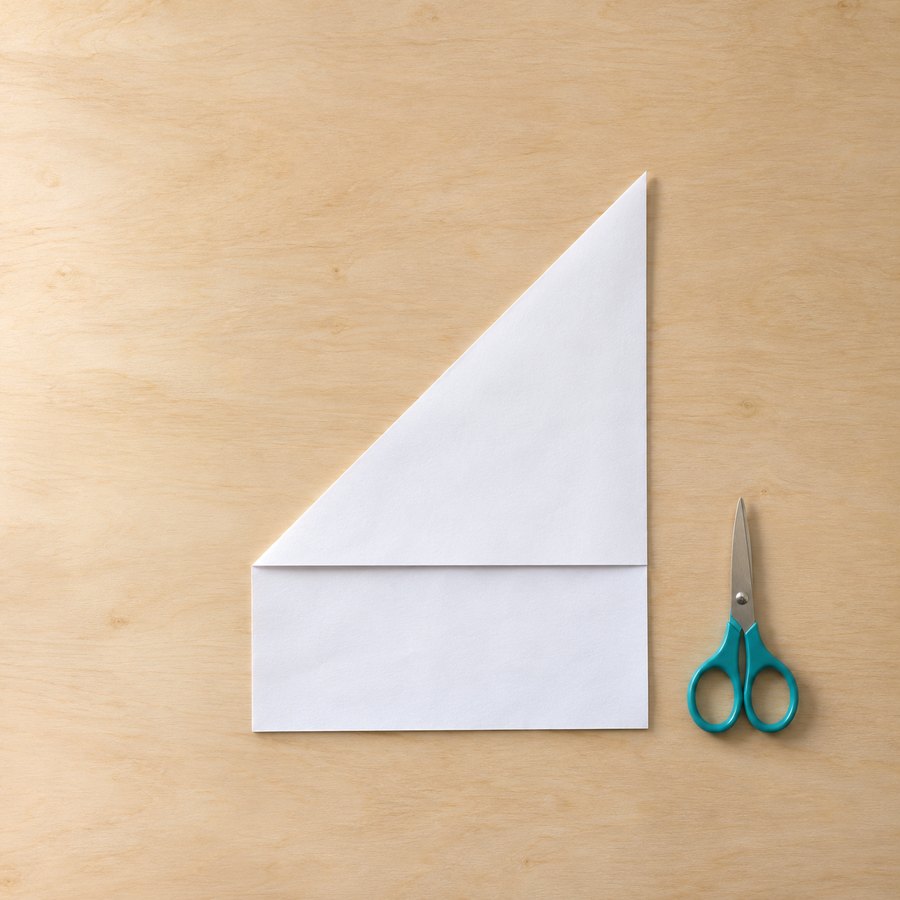
Ordinary printer paper is thicker and stiffer than kami, but it is fine for simple models like the cup, a hat or a boat. Anything with many layers gets bulky fast. Most people have it at home, which makes it useful for trying a model out before you use nicer paper. To turn a sheet into a square, follow the steps for making a square from A4.
Paper napkins are soft and don't hold sharp creases, so they suit napkin folding more than origami models. Banknotes are crisp and fold well, and money origami has its own following, but a note is a rectangle, so most square diagrams won't work on it without changes.
Origami paper types compared
A quick summary of the papers above. Thickness here is how the sheet feels in the hand, from thin kami to stiff card-like paper.
| Paper | Thickness | Good for | Watch out for |
|---|---|---|---|
| Kami | Thin | Most models, learning, folds with many layers | Tears if the same crease is refolded many times |
| Double-sided | Thin | Models where both faces show | Diagrams that say "white side up" need a moment of thought |
| Chiyogami / yuzen | Thin to medium | Boxes, envelopes, simple decorations | The pattern gets lost in small details |
| Washi | Medium | Models that get handled a lot | Soft kinds give rounder creases |
| Foil | Thin | Small points, models that must keep their shape | Creases can't be undone; the white side tears |
| Tant and other thick coloured paper | Medium to thick | Modular origami, boxes | Bulky in models with many layers |
| Kraft | Medium to thick | Large models, gift boxes | Must be cut square; stiff at small sizes |
| Printer paper | Medium | Simple models, practice | Gets bulky quickly |
What to buy first
If you are just starting, buy a pack of 15 cm (6 in) kami in mixed colours. It is the size most diagrams assume, it is cheap enough that you won't hesitate to use a sheet for practice, and it works for nearly every beginner model. If a friend asked me, that is the only pack I would tell them to get. The beginner's guide has a list of first models to try with it.
After that, add paper based on what you end up folding. People who get into modular origami usually move to smaller, slightly thicker sheets. If you fold gifts, a pack of chiyogami or double-sided paper is a nice addition, and foil is worth a small pack once your creases are accurate.