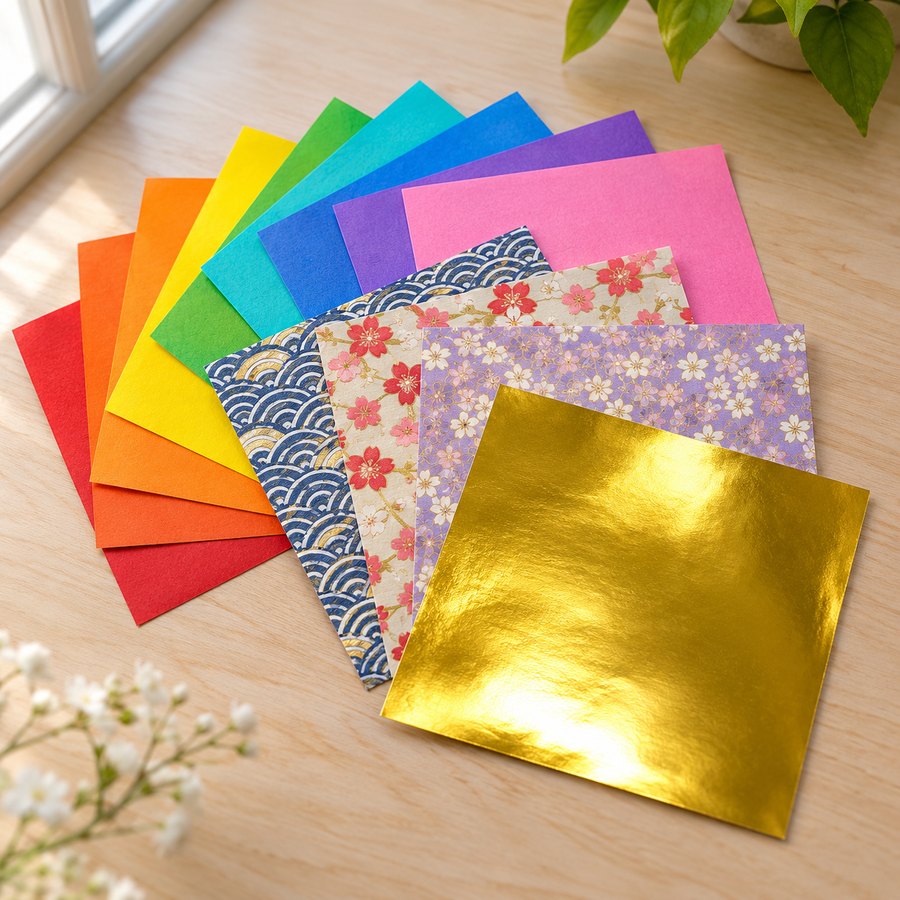
Common origami paper sizes
Packs come in a handful of standard sizes:
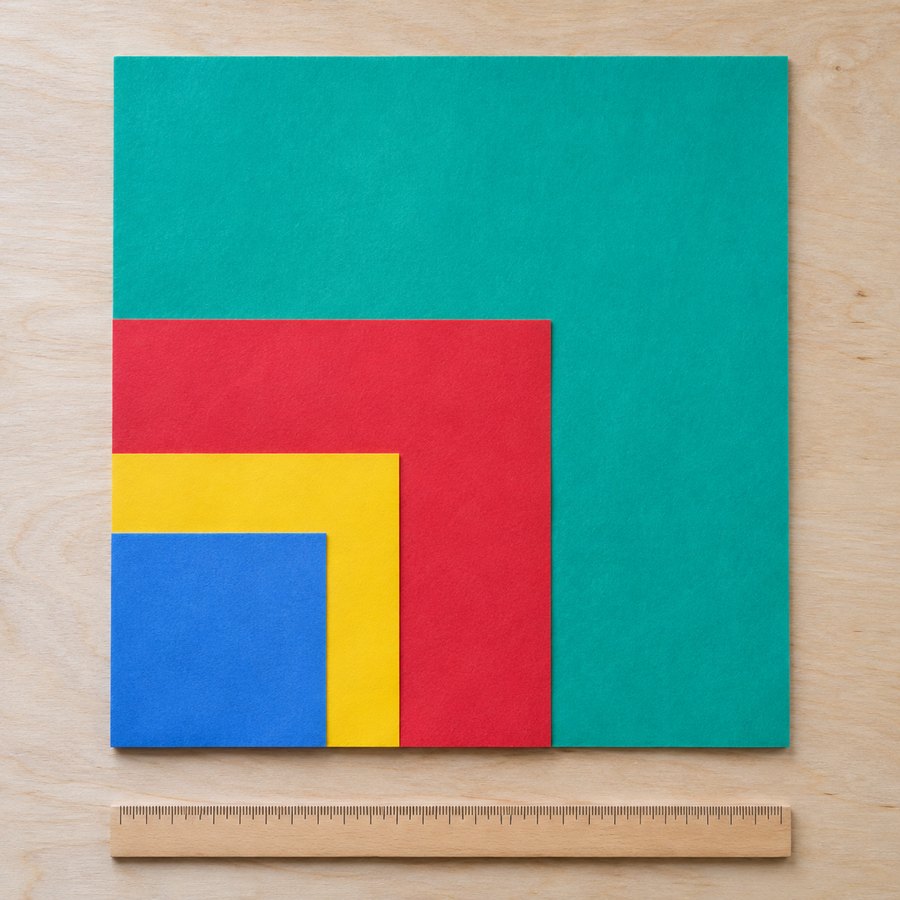
- 7.5 cm (about 3 in): small sheets, used mostly for modular origami and tiny models
- 10 cm (about 4 in): a compact size for simple models and small decorations
- 15 cm (about 6 in): the most common size and the one most diagrams are drawn for
- 24 cm (about 9.5 in): for models with many steps, where extra paper makes the small folds easier
- 35 cm (about 14 in): for complex models with lots of layers
Inches, rectangles and other formats
In the US, origami paper is often sold in inches. A 6 inch square is 15.2 cm, close enough to 15 cm that you can use it with any diagram written for that size.
A few models start from a rectangle, such as a banknote or a silver rectangle (a sheet with the proportions of A4), but nearly everything for beginners starts from a square.
Which size to start with
Start with 15 cm. It is big enough to see what you are doing and small enough that the paper doesn't flop around in your hands. When a diagram doesn't mention a size, it usually means 15 cm.
Children can fold 15 cm squares, but a slightly bigger square of 15 to 20 cm is often more comfortable. The flaps are larger, which makes them easier to line up, and a corner that lands a little off matters less.
Small paper makes models with many folds harder. At 7.5 cm the layers in a crowded area get thick compared with the flaps, and narrow points are hard to fold neatly. The first time I fold a new model, I use 15 cm or larger and only go smaller once I know the steps.
Small squares for modular origami
Modular origami is built from many identical units that slot together, sometimes dozens of them. This is where 7.5 cm squares are common. Each unit is simple, so the small size causes no trouble, and the finished piece doesn't grow too big. If you only have 15 cm paper, you can cut each sheet into four 7.5 cm squares.
Making a square from A4 or Letter paper
Without origami paper, a sheet of printer paper gives you a larger square. A4 (21 × 29.7 cm) gives a 21 cm square, and US Letter (8.5 × 11 in) gives a 21.6 cm square. The steps are on the page about making a square from A4.
A 21 cm square is a good size for a first go at a new model, since the folds are big and easy to follow. Printer paper is thicker than origami paper, so keep it for simple models.
How big the finished model will be
The finished size grows in direct proportion to the edge of the square. Double the paper and the model doubles in width and height; halve it and the model halves. To work out any size, divide your paper edge by 15 and multiply the 15 cm figures below by the result.
Finished sizes of the models on this site, width × height, rounded to the nearest 0.5 cm:
| Model | 7.5 cm square | 15 cm square | 21 cm square |
|---|---|---|---|
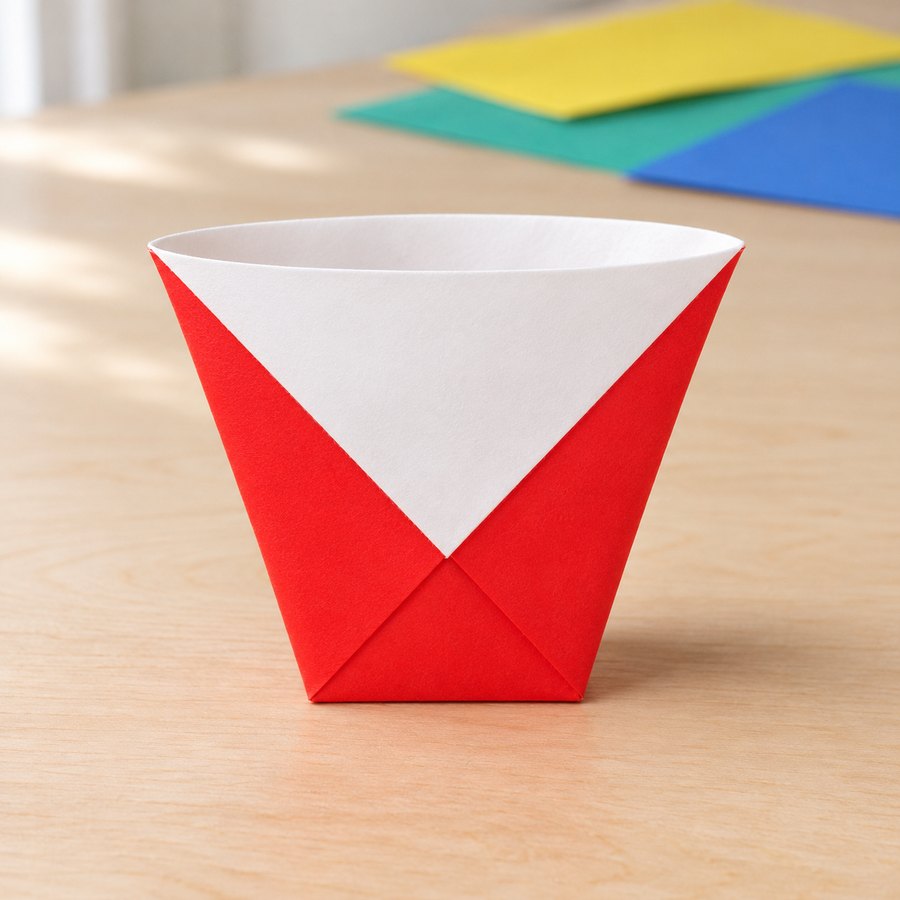
| Paper cup | 4.5 × 3 cm | 9 × 6 cm | 12.5 × 8.5 cm |
| Cat face | 6.5 × 7 cm | 13 × 14 cm | 18 × 19.5 cm |
| Dog face | 7.5 × 5.5 cm | 15 × 10.5 cm | 21 × 14.5 cm |
| Heart | 5.5 × 4 cm | 11 × 7.5 cm | 15.5 × 10.5 cm |
Choosing a size for a specific model
The table helps when the model has a job to do. A paper cup from a 7.5 cm square holds a few sweets, while one from an A4 square is wide enough for a handful of popcorn. The origami heart from a 15 cm square is about 11 cm wide, small enough to slip into a greeting card; a 7.5 cm square gives a heart you could stick on a gift tag.